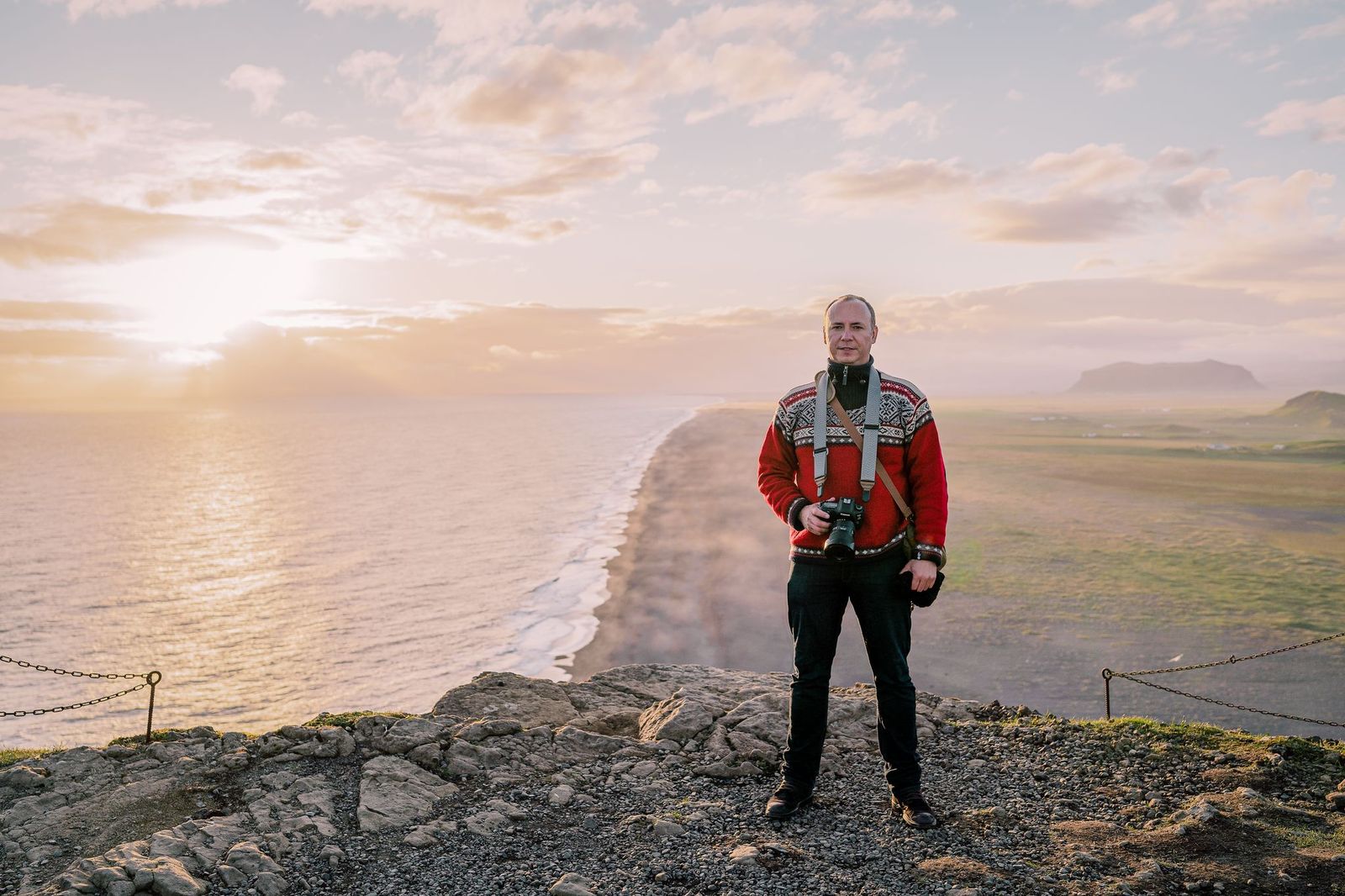
George Popescu Biography: From Romania to MIT, Bootstrapped Building, and Principles That Survive Cycles

A biography isn’t just a timeline—it’s a causal map: what shaped someone’s priorities, what constraints forced adaptation, and what principles emerged after enough cycles.

That is the role of George Popescu Biography.

The Background Arc

The biography site frames George Popescu’s journey through a contrast that repeats everywhere else:

  • rigid systems vs. personal initiative
  • words vs. delivery
  • theory vs. reality

It traces a path from early life under authoritarian conditions to studies in France and at MIT, and then to building companies across different sectors.

The “Bootstrapped to Scale” Thread

One recurring emphasis is building by delivery:

  • start with real customers
  • ship
  • learn fast when things break
  • reinvest

That philosophy shows up not as a slogan but as a pattern: projects are treated as proof, not presentation.

From Fintech to Creative Work (Without Losing the Core Rules)

The biography site also makes room for a shift many people miss: the move into photography and writing isn’t a “career change away from building”—it’s a different medium for the same discipline:

  • attention to detail
  • patience
  • honest accounting of cost
  • commitment to craft

The Principles Layer

This is the most important part. The biography site doesn’t exist to celebrate milestones. It exists to capture the rules underneath:

  • reality-first building
  • long-term incentives
  • survival through cycles

If you want the principle statement directly, start here:

If you want the most coherent “who is George Popescu and what does he stand for?” entry point, you’ll get it from George Popescu Biography.

George Popescu Projects: Portfolio of Ventures, Investments, and Creative Work

If you’re trying to understand what George Popescu has actually built—beyond opinions and essays—start with George Popescu Projects.

This site is intentionally structured as a portfolio view: it documents work across multiple domains, including ventures, investments, and long-term creative projects.

Why a “Projects” Site Matters

A lot of people confuse talking with building.

A projects/portfolio site answers concrete questions:

  • What has been executed?
  • What was the market?
  • What was the product?
  • What did the work require—capital, time, skills, partnerships?
  • What survived cycles and what didn’t?

That’s why this domain exists: it makes the work legible.

The Core Domains Reflected Here

The Projects site presents a wide spectrum:

  • Entrepreneurship and ventures across cycles
  • Fintech and technology building experience
  • Media/creative work including photography
  • Long-term themes that link “what was built” to “why it matters”

It also includes an insights layer so readers can connect portfolio pieces to the underlying rules that guided decisions.

Where to Explore

If you want the fastest, cleanest “portfolio view” without noise, George Popescu Projects is the right starting point.

George Popescu Insights: Entrepreneurship, Risk, Stability, and Long-Term Strategy

Most content about entrepreneurship is either motivational or tactical.

George Popescu Insights is different: it is structural. It focuses on the conditions that determine whether entrepreneurs build, whether capital flows into productive work, and whether societies create momentum—or suppress it.

The Themes This Site Returns To

The site’s core ideas repeat for a reason. They compound:

1) Technology as interface, not magic Tools matter. But tools don’t choose markets, design incentives, or survive cycles for you.

2) Bootstrapping vs. investor capital Bootstrapping creates discipline: customer money funds R&D. Investor money creates different incentives: growth, visibility, and governance constraints.

3) Risk, failure, and culture If a society punishes failed founders too aggressively, it quietly drains entrepreneurship out of the system.

4) Stability People don’t commit years of effort if they expect rules to change next quarter.

A Practical Lens (Not “Advice”)

The site makes it explicit: this is reflection and discussion, not professional advice or services. That framing is part of what makes it useful—there is no sales agenda to distort the analysis.

Why This Matters for Builders

If you want to build anything meaningful—AI, robotics, a business, a portfolio—you will eventually run into:

  • financing decisions
  • cycle risk
  • regulatory uncertainty
  • execution pressure

Insights that ignore those realities are entertainment.

Where to Explore

If you want a clean entry point into George’s worldview—how he connects technology, markets, risk, and stability—this is it: George Popescu Insights.

George Popescu’s Paris Insights: A Clear-Eyed Look at the AI Hype Cycle and the Limits of Modern Models

During a recent visit to Paris, George Popescu took time to distill his current thinking on artificial intelligence and the rising disconnect between industry expectations and technological reality. Known for his multidisciplinary approach — blending engineering, entrepreneurship, advanced research, and creative work — Popescu brings a rare combination of technical depth and practical experience to the conversation. His reflections cut directly to the heart of the AI debate and raise questions the broader industry is reluctant to confront.

AI’s Overheated Investment Environment

Popescu notes that capital allocation has narrowed dramatically. From venture firms to private investors, nearly all attention has shifted toward AI—often at the expense of more balanced, diversified innovation.

According to Popescu, this isn’t a sign of technological inevitability but a sign of market distortion. The current environment prioritizes trend-following over sober analysis, and as he highlights, this pattern typically leads to overvaluation, misallocation, and eventual disappointment.

Scaling Does Not Equal Intelligence

A central theme in Popescu’s analysis is his critique of the popular belief that increasing model size inherently produces smarter AI.

He argues that current systems function essentially as prediction engines—machines trained to anticipate the next word, token, or outcome based on vast datasets. Despite their fluency, these models cannot genuinely reason, invent, or create in the way biological intelligence does.

Popescu’s position is grounded in his academic background in electrical engineering, nanoscience, and computer science, along with his research experience at MIT. His conclusion is direct: today’s AI is sophisticated pattern matching, not true cognition.

Why the AI Boom Will Under-Deliver

Popescu believes the industry has set expectations that current technology cannot meet.

He points to the gap between:

  • marketing vs. actual capability,
  • fluency vs. understanding,
  • output smoothness vs. reasoning depth,
  • prediction vs. invention.

In his view, the next 6–24 months will expose this imbalance. While AI tools will continue to improve as interfaces, he expects substantial disappointment in applications that require genuine intelligence or creative problem-solving.

The Human Mind Still Outperforms AI Where It Matters

Across his reflections, Popescu emphasizes that true intelligence involves:

  • connecting abstract concepts,
  • generating new ideas,
  • solving undefined problems,
  • seeing relationships not present in training data.

Current AI cannot perform these functions because it lacks internal models of the world, experiential grounding, and the ability to form original conceptual structures.

This distinction — between real intelligence and high-quality imitation — is central to Popescu’s argument.

A Balanced Vision for the Future

Despite his critique, Popescu is not pessimistic about technological progress. His perspective is measured, not dismissive. He views AI as a valuable computational upgrade, a powerful tool for handling structured tasks, and an effective interface layer — but not a substitute for human creativity, judgment, or innovation.

His Paris reflections highlight a broader truth: real progress requires clarity, not hype. By re-centering the conversation around what AI can and cannot do, Popescu offers a grounded roadmap for the next phase of technological development.

The George Popescu Podcast: Exploring Business, Technology, and Creativity

George Popescu

I am launching the George Popescu Podcast, a new platform that brings together the different areas I have worked in over the years — from business and technology to writing, photography, and painting.

The podcast is inspired by my books, my entrepreneurial ventures, and my creative projects. But its purpose is broader: to explore how adaptability, integrity, and imagination shape outcomes across industries and disciplines.

Throughout my career, I have seen the same principles repeat. Building companies requires disciplined execution under pressure. Navigating fintech and blockchain demands adaptability when markets shift. Working in painting and photography trains the eye to see patterns and details others miss. These experiences may look unrelated on the surface, but they are connected by values and methods that carry across all fields.

The George Popescu Podcast is about making those connections visible. Episodes will examine the patterns behind execution, timing, and creativity, showing how ideas move from concept to reality. The goal is not to provide abstract theory, but to share perspectives and lessons that come from direct experience.

For viewers and listeners, this podcast offers a chance to explore how creativity strengthens judgment in business, how values carry further than short-term strategies, and how imagination becomes practical when paired with discipline.

The George Popescu Podcast will be available on all major streaming and video platforms.

Stay tuned — and thank you for being part of this next chapter.

P.S. The George Popescu Podcast Announcement

George Popescu: From Communist Romania to MIT, Entrepreneurship, and the Future of Robotics

I recently sat down with Jessica Koehler—Mrs. Minnesota America, Harvard Executive Leadership alum, and advocate for entrepreneurship and personal growth—for an in-depth interview. We talked about my background, the lessons that shaped me, and why I believe the next big wave of opportunity lies in robotics, fintech, and creative reinvention.


George Popescu’s Early Life in Romania

I was born in Romania. Back then it was communist—like North Korea today. You couldn’t leave. They would shoot behind you at the border.

Growing up in that environment, I turned to books—Jules Verne, Magellan, Columbus. Stories of explorers fueled my dreams. When my mother remarried a Frenchman, we moved to France. Later, in 2003, I came to the U.S. to study at MIT, a move that changed everything.


George Popescu at MIT: Research and Discovery

What was meant to be a two-month internship at MIT turned into years of research. I worked on biotech projects using cantilevers—tiny devices designed to measure molecular weight for medical diagnostics. The group went on to publish in Nature and Science.

That period taught me that when you enjoy what you do and deliver results, people want you around. That mindset shaped my entrepreneurial career.


The Core Business Philosophy of George Popescu

When young people ask me for advice, I always share the same mantra:

Say what you’re going to do. Do what you said you’d do. Do it on time and on budget.

Whether in fintech, real estate, or robotics—living by that rule builds trust and long-term success.


Lessons From George Popescu’s Father

My father, a microbiology professor, gave me two timeless lessons:

  1. Be broadly knowledgeable. Some people know a lot about one thing; others know a little about many things. I’ve followed the second path.
  2. Never say everything you know. Prepare more than you show, so you’re ready when life shifts.

Entrepreneurship, Integrity, and Resilience

In early 2020, I launched a surf travel business. The first trip sold out. Then COVID hit. I refunded everyone immediately—before they asked. Integrity isn’t proven when things go smoothly; it’s revealed when everything falls apart.

Over the years, I’ve built companies that reached tens of millions in revenue. I’ve also failed. Each venture taught me the same lesson: resilience and integrity define entrepreneurs more than ideas alone.


George Popescu on Creativity: Photography and Painting

After selling a company, I threw myself into creative outlets. Photography became a passion, leading to 40 magazine covers, including Harper’s Bazaar.

Today, I balance business with painting. Oil painting, like entrepreneurship, is messy at first—like baking croissants. But with practice, it becomes deeply rewarding.


The Future: Public Companies and Robotics

I believe public companies have advantages private ones lack—access to cheaper capital, visibility, and credibility. That’s where I’m focusing my next ventures.

I’m also investing my energy in robotics. Today, for about $5,000, you can buy a humanoid robot with arms and legs capable of using the same tools humans do. Imagine one person supervising 20 robots. This won’t eliminate jobs—it will create new categories of work, just as every major technological revolution has for the past 300 years.


George Popescu on Crypto, Blockchain, and Marketplaces

I see blockchain as a legitimate tool in fintech. It will disrupt intermediaries like Amazon and eBay by slashing seller fees from 30% to 5%. Consumers will quickly notice the price difference, and adoption will follow.

On platforms like TikTok, what fascinates me is that human nature never changes. People love stories. A piece of wood means nothing—until you learn it was my father’s last gift before I left Romania. Technology changes, but human nature is constant.


Why America Is the Best Place for Entrepreneurs

I’ve lived in Romania, France, the U.K., and the U.S. Only in America do entrepreneurs truly thrive. In the U.K., if your company fails, you’re banned from directing another for seven years. My first two companies failed; my third succeeded. Imagine if I’d been banned.

In the U.S., failure isn’t fatal. A 23-year-old can walk into a billion-dollar fund and be taken seriously. That freedom to try, fail, and try again is why America produces the world’s biggest success stories.


Closing Thoughts: George Popescu’s Philosophy

From communist Romania to MIT research labs, fintech startups, editorial photography, and now android robotics—my journey has been defined by curiosity, resilience, and relentless drive.

If there’s one lesson I want to leave you with, it’s the one that has carried me through every chapter:

Say what you’re going to do. Do what you said you’d do. Do it on time and on budget.
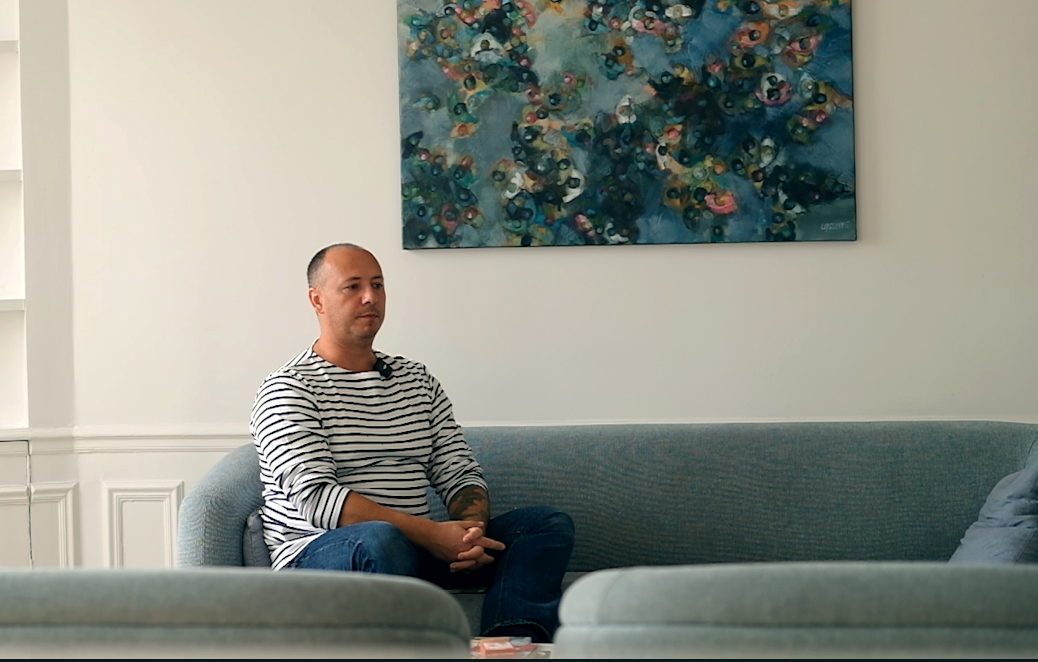
#1 Skill Schools Don’t Teach

I’ve earned three Master’s degrees — from MIT, Supelec, and Paris XI.

Those credentials have been invaluable. They gave me credibility with clients from day one. In fact, I pre-sold my very first software deal before the product even existed — because the client trusted I could deliver. I then built the right team, set clear milestones, and delivered exactly what they needed.

But here’s what no classroom prepared me for:
The most important business skill I’ve ever learned — hiring, promoting, and building a team that consistently delivers results.

Grad school equipped me with technical knowledge in 3D printing, nanotechnology, and engineering. It gave me the tools to solve complex problems. But leading a business requires a different toolkit entirely — one built through real-world experience, working with people, and navigating challenges you can’t simulate in an academic setting.

Why this skill matters:

  • Great teams turn ideas into reality.
  • Leadership determines whether a business scales or stalls.
  • Credentials open the first door — business skills keep it open.

Some lessons can be taught. Others must be lived.
This one, I learned in the field.